Drone Certification Process 101:
Tips from a Licensed Drone Pilot
By: Noah Pullon, EI
By: Noah Pullon, EI
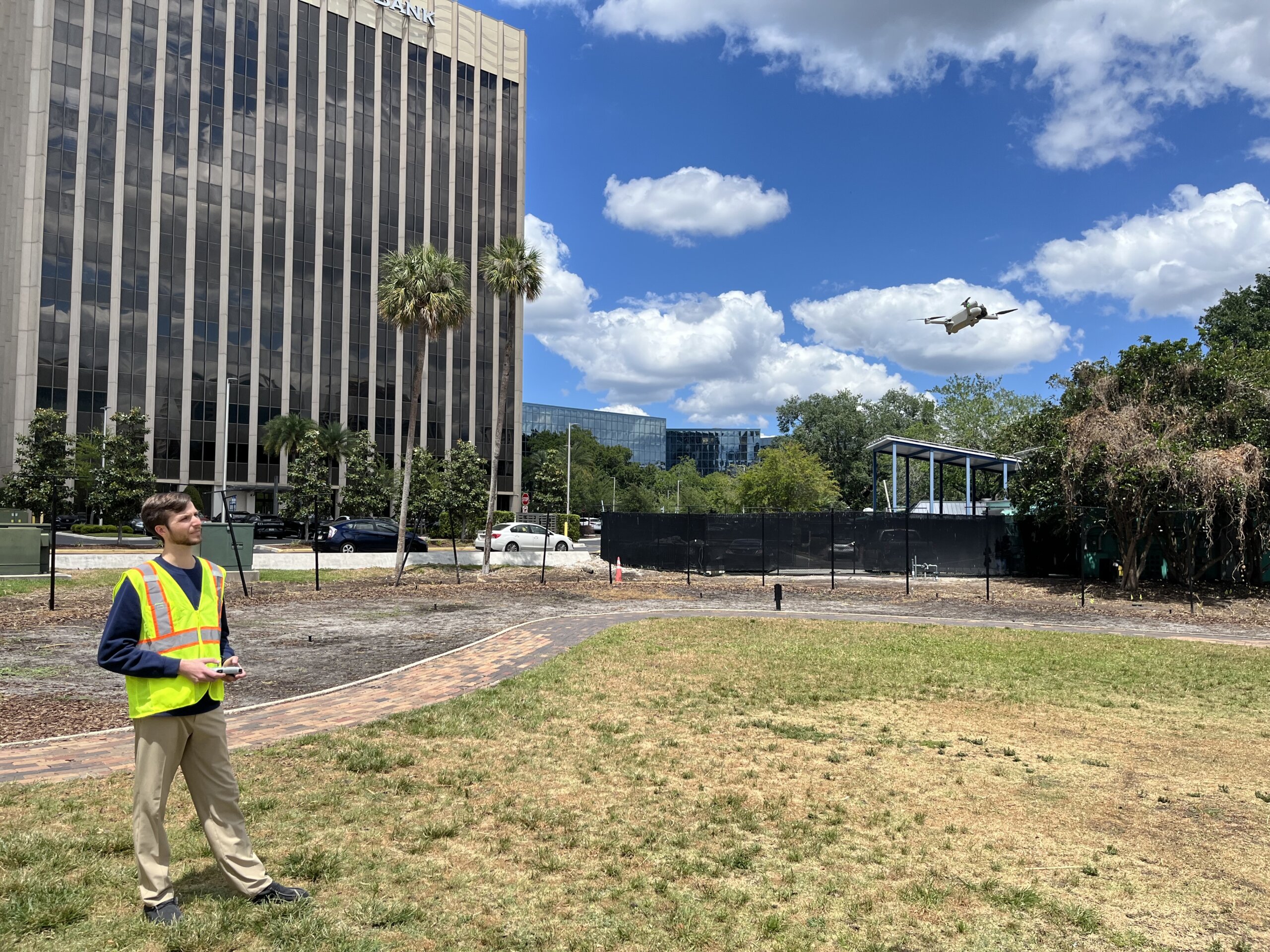
Noah is a Roadway Engineering Intern with Patel, Greene and Associates and a Part 107 Commercial drone pilot. As a member of PGA’s internal drone committee, he supports project and pursuit efforts by integrating drone technology into deliverables. Noah is passionate about using innovative tools to enhance project outcomes and is committed to delivering high-quality roadway design work that meets client needs.
Are you thinking about becoming a drone pilot? Here’s what you need to know: from licensing requirements and safety regulations to understanding airspace and clocking real-world experience, there are a few key steps that can make or break your success. Before you invest time and money, it’s worth getting a clear picture of what the licensing process involves.
If you are looking to fly drones commercially, meaning get paid, you need a Part 107 Remote Pilot Certificate. If you’re interest in strictly recreational, getting your drone certificate is still encouraged, but it is not required by the Federal Aviation Administration (FAA).
Hit the Books
Your first step in the process of getting your Remote Pilot Certificate is to study for the exam. There are many different companies that offer study material for the Part 107 certification, and the FAA also provides study materials for free online. Drone U and Pilot Institute are two of the better-known paid training courses. I used Pilot Institute for two weeks prior to my exam and passed on the first try. The course cost $160 and included lifetime access. I studied two hours every night for two weeks, watching the instructors’ videos and took the practice exams (definitely don’t skip the practice problems and exams). Balancing studying with a full-time job was tough, but ultimately, it was worth it to pass the exam and become a drone pilot. The exam covers topics such as wind, weather, reading airspace maps, safety, etc.
Obtain FAA Tracking Number
Next, you need to create an account through the Integrated Airman Certification and Rating Application (IACRA) system before applying to take the exam. This is a simple but important step to be able to take the exam. Submitting this application kicks off the process for receiving your certification. This application only takes a few minutes to fill out. Find it
Exam Time
You must take the exam at an FAA approved testing center. The exam costs $175 and consists of 60 questions. You have two hours to complete it and score at least 70% to pass. The exam is an online-based exam and all of the required materials are provided, including airspace maps and other references. Question types include multiple choice, multiple select, fill in the blank, and matching. Remember to bring a government-issued photo ID to the testing center. You will receive your test results immediately after you take the exam.
Complete the FAA Form 8710-13
Another form to fill out! For this one, you log back into IACRA and fill out the 8710-13 Form. Again, it only takes a few minutes to fill out and helps wrap up the process. Next, you will receive a temporary airman certificate from the FAA via email. Ina couple of weeks, you will receive your permanent Remote Pilot Certificate (card) in the mail. This card must always be kept on your person when you operate a drone.
Register Your Drone
If you own your own drone, the cost to register it through the FAA is only $5. You can register your drone on the FAA drone zone website, which will be valid for two years. The FAA suggests that you label your drone with the registration number to help locate the owner in case it is lost.
Time to Fly! (Almost)
The study materials and exam do not teach you how to actually fly a drone, so I would suggest taking an additional course or asking a current remote pilot to teach you how to fly. Additionally, there are countless YouTube videos providing tips and tricks to hone your piloting skills. Here’s one from the Pilot Institute that I found helpful.
Some things to keep in mind when you are flying:
- Whenever possible, arrange to be accompanied by someone to serve as a second set of eyes
- Do not fly the drone more than 400 ft above ground level (AGL)
- Do not fly in restricted airspace (near airports or other restricted airspaces)
- Do not fly over people unless you have propeller protection installed on your drone
Keep Your Certification Current
You must keep your certificate current and renew every 24 calendar months via an online refresher course. This online training is provided by the FAA; it is free and takes a few hours to complete. If you do not take the training within 24 calendar months, you have to restart the certification process: take the exam again and pay another $175 test fee. So, do not let your certificate lapse. It is much easier to take the online training than to restart the process over again.
Flying a drone can be fun and rewarding, but it can also be dangerous. Getting your Part 107 Remote Pilot Certificate as well as understanding and following the rules and regulations can help make flying much safer for pilots and the general public.
Resources:
FAA website for part 107 commercial drone certification process: https://www.faa.gov/uas/commercial_operators/become_a_drone_pilot
FAA website for commercial drone pilots: https://www.faa.gov/uas/commercial_operators
FAA part 107 knowledge test study materials: https://www.faa.gov/uas/resources/policy_library#107
FAA part 107 small UAS recurrent course: https://www.faasafety.gov/gslac/ALC/CourseLanding.aspx?cID=677